Essential Tire Care and Maintenance for Land Rover Performance
Essential Tire Care and Maintenance for Land Rover Performance
Welcome to our comprehensive guide on maximizing the performance, safety, and longevity of your luxury SUV. Today, we sit down with our Lead Service Advisor at Land Rover South Dade, located in beautiful Miami, Florida. With decades of collective team experience specializing in luxury, high-performance British engineering, our advisory team understands exactly what it takes to keep your vehicle performing at its peak. Whether you are navigating the unpredictable, water-logged streets of South Florida during our intense summer thunderstorms or tackling rugged off-road weekend adventures, your tires are the single most critical point of contact between your sophisticated luxury machine and the earth beneath you.
In this extensive, in-depth Q&A session, we delve deep into the mechanical realities of modern tire engineering. We discuss everything from the unique thermal challenges that our tropical climate imposes on rubber compounds to the intricate engineering needs of heavy electric and plug-in hybrid powertrains. Our goal is to provide you with actionable, high-value knowledge so that you can make informed decisions about your vehicle’s maintenance. Read on to discover how proper tire management preserves your vehicle’s iconic capabilities and why visiting a specialized facility like Land Rover South Dade is essential for safeguarding your automotive investment.
To speak directly with our team of certified specialists, you can Call us at (305) 909-4000 or schedule a personalized consultation. Let us explore how we can elevate your driving experience through scientific tire care.
Q: How often should you check tire pressure on a high-performance Land Rover?
Expert Answer: In Miami, Florida, tire pressure is not a set-it-and-forget-it parameter. We strongly recommend that our clients check their tire pressure at least once a month, and ideally every two weeks during the intense summer season. The reason is rooted in pure physics: tire pressure changes by approximately 1 to 2 PSI for every 10-degree change in ambient temperature. In South Florida, where pavement temperatures can easily soar past 130 degrees Fahrenheit, the thermal expansion and contraction cycles of air inside your tires are extreme.
When you drive on under-inflated tires, the tire’s sidewalls flex excessively, generating immense internal heat that can lead to catastrophic tread separation or structural failure. Furthermore, incorrect PSI severely degrades fuel economy, increases rolling resistance, and compromises the sophisticated handling dynamics of systems like Active Roll Stabilization and Terrain Response. Always measure pressure in the morning when the tires are ‘cold’ (driven less than a mile) to get an accurate baseline reading.
To ensure maximum safety, always refer to the tire inflation placard located on the driver’s side B-pillar or inside the fuel filler flap, rather than the maximum pressure listed on the tire sidewall itself. This manufacturer recommendation is specifically calculated to balance the vehicle’s weight distribution, suspension geometry, and high-speed stability.
Our service department utilizes ultra-precise digital gauges and offers pure nitrogen inflation upon request. Nitrogen has larger molecules than normal atmospheric air, which dramatically slows down natural pressure loss and minimizes internal moisture buildup. This is highly beneficial in our humid coastal environment.
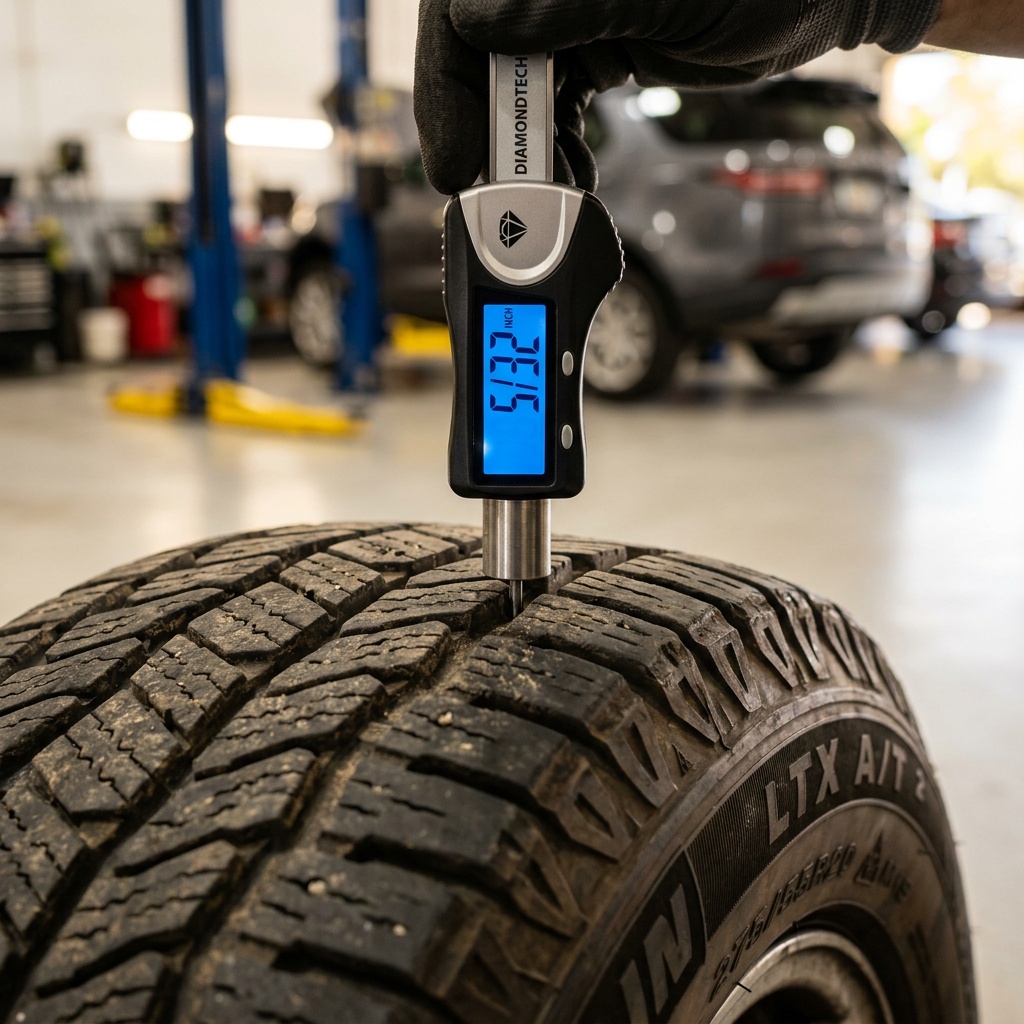
Q: How do you check tire tread depth and know when to replace tires?
1. The Penny & Quarter Tests
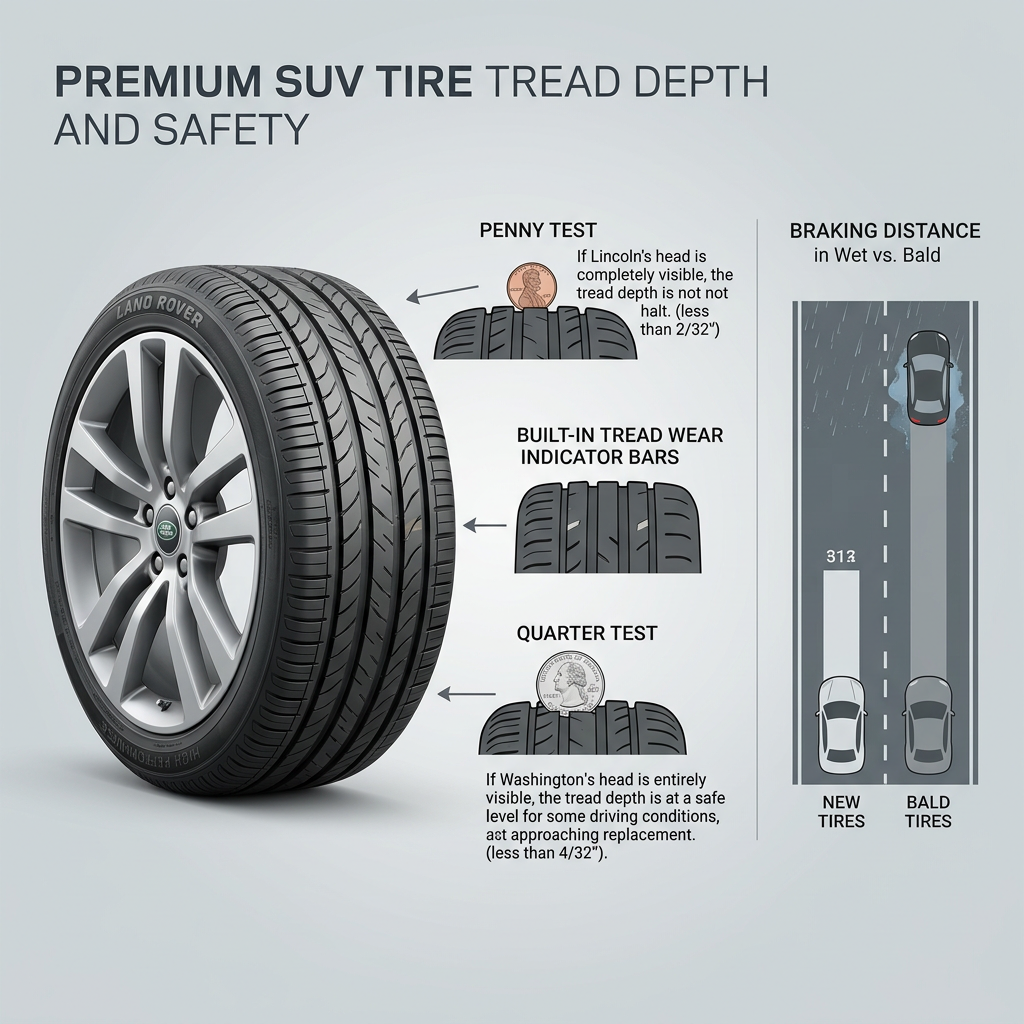
Insert a penny upside down into the tread. If Lincoln’s entire head is visible, your tread is below 2/32″ and is legally bald. However, we advocate for the quarter test: if the top of Washington’s head is visible, you are at or below 4/32″. At this critical threshold, wet-weather stopping capability drops exponentially, and replacement is highly recommended to maintain control on wet roads.
2. Reading Indicator Bars
Modern luxury tires feature built-in Tread Wear Indicator (TWI) bars molded into the base of the main tread grooves. These narrow, flat rubber bands run perpendicular to the tread direction. When your outer tread wears down to be completely flush with these horizontal safety bars, your tires have reached the absolute limit of their safe operating lifespan.
3. Wet Weather Traction Loss
While 2/32″ is the legal minimum, our tropical climate demands a higher safety margin. At 4/32″, the tire’s ability to evacuate water from the contact patch decreases by more than 50%. This dramatically increases stopping distance and heightens the risk of hydroplaning. For your family’s safety, do not wait until the absolute legal minimum to replace them.
Q: How do bald tires affect braking distance and wet-weather safety in Miami?
Expert Answer: Driving on worn or bald tires in South Florida is a recipe for disaster, particularly during our sudden afternoon downpours. When a tire loses its tread depth, it loses its capacity to channel water away from the contact patch. At highway speeds, water builds up underneath the tire, lifting the vehicle off the asphalt entirely. This phenomenon is known as hydroplaning, and it renders your steering, braking, and stability systems completely useless.
To quantify this safety risk: empirical testing demonstrates that a premium SUV traveling at 70 mph on wet pavement requires nearly twice the distance to come to a complete stop when riding on tires with 2/32″ tread compared to brand-new tires with 10/32″ tread. That difference can easily mean the difference between a safe, controlled stop and a severe highway collision. Do not gamble with your safety or the integrity of your luxury vehicle.
Q: What happens if you skip regular tire rotations?
Expert Answer: Skipping tire rotations leads to rapid, uneven tread wear, which ultimately cuts your tires’ operational lifespan in half. Because the front axle of your vehicle handles the majority of steering forces and weight transfer during braking, front tires naturally wear out at a different rate and pattern than rear tires. If left unrotated, you will experience ‘feathering’ or ‘cupping’ of the tread blocks, which produces a highly intrusive, low-frequency cabin drone that ruins the refined, whisper-quiet ride quality of your luxury vehicle.
Additionally, our sophisticated permanent All-Wheel Drive (AWD) systems rely on highly precise, matched wheel rolling diameters to function optimally. When front and rear tires have significantly different tread depths, it forces the center differential to continuously compensate for the minor speed differences between axles. Over time, this extra mechanical stress can lead to premature wear on your transfer case and drivetrain components, resulting in costly mechanical repairs.
We recommend rotating your tires every 5,000 to 7,500 miles, or at least once every six months. Combining a professional rotation with a laser wheel alignment inspection is the absolute best way to protect your physical investment and preserve your vehicle’s peerless handling characteristics.
Q: All-Terrain vs. Highway All-Season Tires on a Land Rover Defender
Highway All-Season
These are optimized for on-road comfort, low rolling resistance, and whisper-quiet cabin acoustics. If your luxury SUV spends 95% of its time on highways, commuting, or running errands, highway tires will deliver the smoothest, most fuel-efficient ride. They utilize tighter, continuous tread patterns that maximize tarmac contact and wet braking.
All-Terrain (A/T) Tires
Engineered with reinforced sidewalls, deeper tread blocks, and wide shoulder grooves to self-clean mud, gravel, and sand. Perfect for iconic models like the Defender, A/T tires excel in off-road settings and loose soil. They provide unmatched physical durability against puncture and structural bruising when traversing demanding terrains.
The Real Trade-Offs
Choosing between them involves trading off off-road traction for highway refinement. A/T tires produce slightly more cabin noise and can reduce fuel efficiency by 1-3% due to their aggressive aerodynamic profile and higher rolling resistance. However, they preserve the vehicle’s legendary go-anywhere spirit and provide rugged aesthetic appeal.
|
Tire Category
|
Off-Road Grip
|
Highway Comfort
|
Tread Lifespan
|
|
Highway All-Season
|
Moderate
|
Exceptional (Low Noise)
|
45,000 – 65,000 Miles
|
|
All-Terrain (A/T)
|
Excellent
|
Good (Mild Hum)
|
35,000 – 50,000 Miles
|
|
Mud-Terrain (M/T)
|
Extreme
|
Fair (High Noise)
|
25,000 – 35,000 Miles
|
|
Ultra High Performance
|
Low
|
Outstanding (Sporty)
|
20,000 – 30,000 Miles
|
Q: Do all-terrain tires wear out faster than highway tires?
Expert Answer: Yes, generally speaking, aggressive All-Terrain tires will wear out faster than standard highway all-season tires when driven exclusively on paved roads. This is due to the chemical composition of the rubber compounds and the physical design of the tread. To maintain flexibility and grip on rocks and loose dirt, A/T tires utilize slightly softer rubber compounds. When these compounds are subjected to hot, abrasive Miami asphalt day after day, they wear down more rapidly than harder highway compounds.
Furthermore, the large open spaces between the tread blocks in an aggressive tire allow individual tread elements to flex more under acceleration, braking, and cornering. This flexing action causes accelerated, uneven wear patterns if the tires are not rotated frequently or if the vehicle’s suspension alignment is even slightly out of specification.
To maximize the lifespan of your A/T tires, it is vital to check alignment annually and maintain perfect tire pressures. Minor alignment deviations that go unnoticed on a highway tire will rapidly ‘heal-and-toe’ wear an aggressive off-road tread, causing severe noise and vibration.
Q: Which tire brand offers a longer treadwear warranty for luxury SUVs?
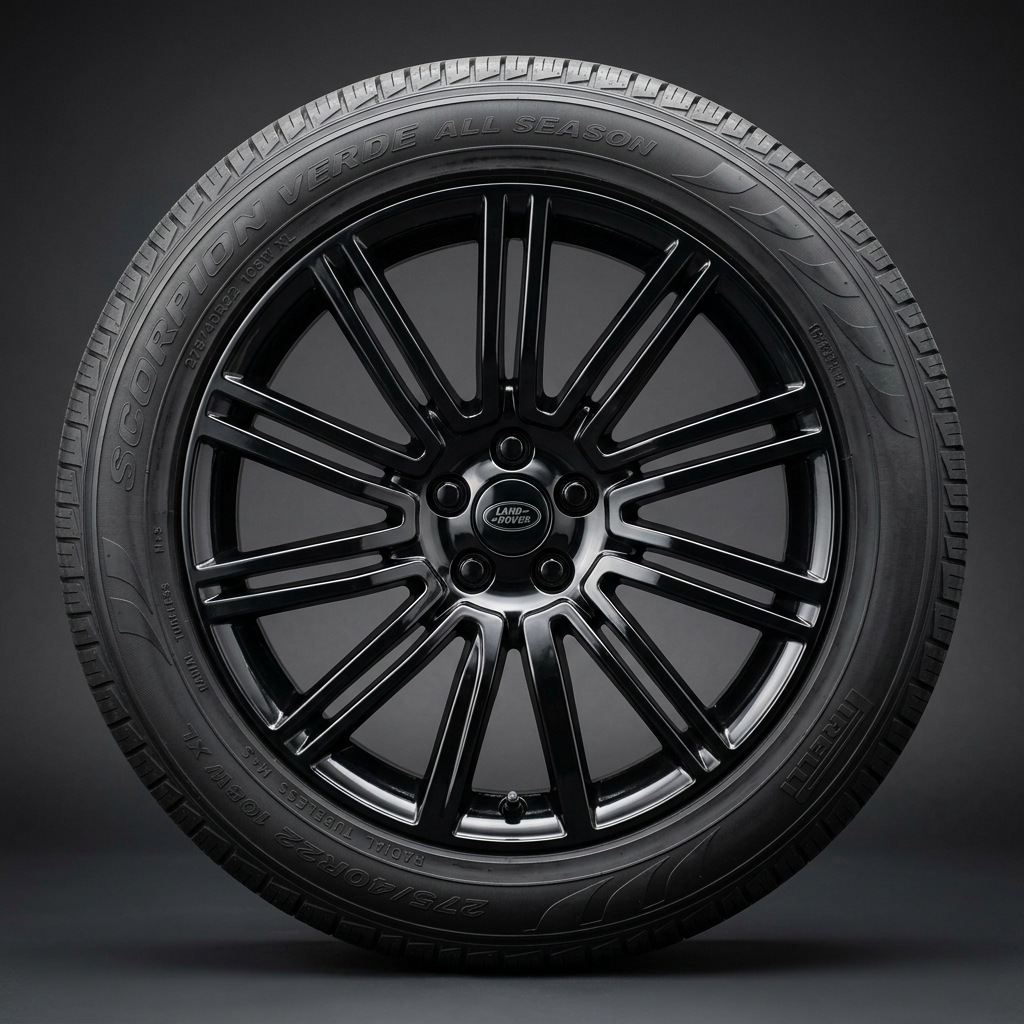
Expert Answer: When shopping for premium replacement tires, understanding treadwear warranties is key. Premium manufacturers like Michelin, Pirelli, and Goodyear all offer excellent, yet structurally different, warranty protections. For instance, Michelin’s high-end highway tires, such as the Defender LTX M/S, often come with robust treadwear warranties up to 70,000 miles. Pirelli, which focuses heavily on high-performance road holding, provides competitive mileage warranties on their Scorpion family, though high-performance compounds inherently carry lower mileage ratings due to their softer grip characteristics.
It is critical for luxury SUV owners to understand that treadwear warranties are typically cut in half for the rear wheels if your vehicle runs a ‘staggered’ setup (where the rear tires are wider than the fronts, preventing front-to-back rotation). Furthermore, keeping digital records of regular tire rotations and alignment checks at an authorized facility like Land Rover South Dade is mandatory to maintain warranty validity with any manufacturer.
Q: Do electric and hybrid luxury vehicles require specific high-load tires?
Expert Answer: Absolutely. Electrified luxury vehicles—including plug-in hybrids (PHEV) and fully electric models—are significantly heavier than their standard internal combustion engine counterparts due to the immense weight of the lithium-ion battery packs. This extra weight places massive constant stress on the tires. To handle this, manufacturers have developed specialized tires with an ‘HL’ (High Load Capacity) rating. These tires feature heavily reinforced sidewalls and structures designed to carry more weight without deforming.
Additionally, electric vehicles deliver 100% of their torque instantly from a standstill. This instant power can shred standard tires in a matter of months. EV-specific tires are engineered with specialized rubber compounds and tread designs that handle high torque loads while offering low rolling resistance to maximize battery range. They also feature internal acoustic foam liners to suppress tire-cavity noise, ensuring your silent EV cabin remains exceptionally quiet.
When replacing tires on electrified models, never substitute a standard tire for an HL-rated EV tire. Doing so can compromise safety, accelerate tire wear, and void your manufacturer vehicle warranty.
Q: Is tire maintenance covered under prepaid maintenance plans?
Expert Answer: Standard Land Rover Prepaid Maintenance Plans are designed to cover scheduled routine maintenance items such as engine oil changes, cabin filters, brake fluid flushes, and multipoint inspections. While tire rotations are often included as part of these comprehensive plans, the actual physical wear-and-tear replacement of tires, flat repairs, and wheel alignments are generally excluded.
To safeguard your tires and wheels against costly road hazards, we highly recommend our optional Road Hazard Wheel and Tire Protection Package. This premium coverage is designed specifically for luxury vehicle owners in metropolitan areas like Miami, where road construction debris, potholes, and curbs present daily hazards to your beautiful alloy wheels and low-profile performance tires.
Under this road hazard protection plan, if you run over a nail, hit a deep pothole, or damage a tire beyond repair, the package covers 100% of the replacement cost, including mounting, balancing, and environmental disposal fees. It even offers cosmetic wheel repair for scuffs and scrapes. Speak with our finance or service team to learn how to add this peace-of-mind coverage to your vehicle.
Q: How do you secure a pre-order slot with specific performance tires?
1. Custom Specification
When pre-ordering an upcoming model at Land Rover South Dade, you have the unique opportunity to configure your vehicle directly from the factory. Our sales specialists will guide you through choosing the ideal wheel diameters and tire configurations—whether you require high-speed summer tires for track-level performance or aggressive off-road options.
2. Deposit & Allocation
Once your configuration is complete, securing your priority allocation requires a formal deposit. As a high-volume premier dealership, we receive highly sought-after factory build slots. Securing your slot early ensures your vehicle is manufactured exactly to your technical specifications with no compromises on your mechanical choices.
3. Delivery & Inspection
When your vehicle arrives at our Miami dealership, our certified service team performs a rigorous Pre-Delivery Inspection (PDI). We verify tire pressures, road-test the vehicle to ensure perfect wheel balancing, and calibrate the advanced electronic suspension and tire pressure monitoring systems to guarantee your vehicle drives flawlessly from mile one.
Q: Where is the best place to buy certified tires in the Miami area?
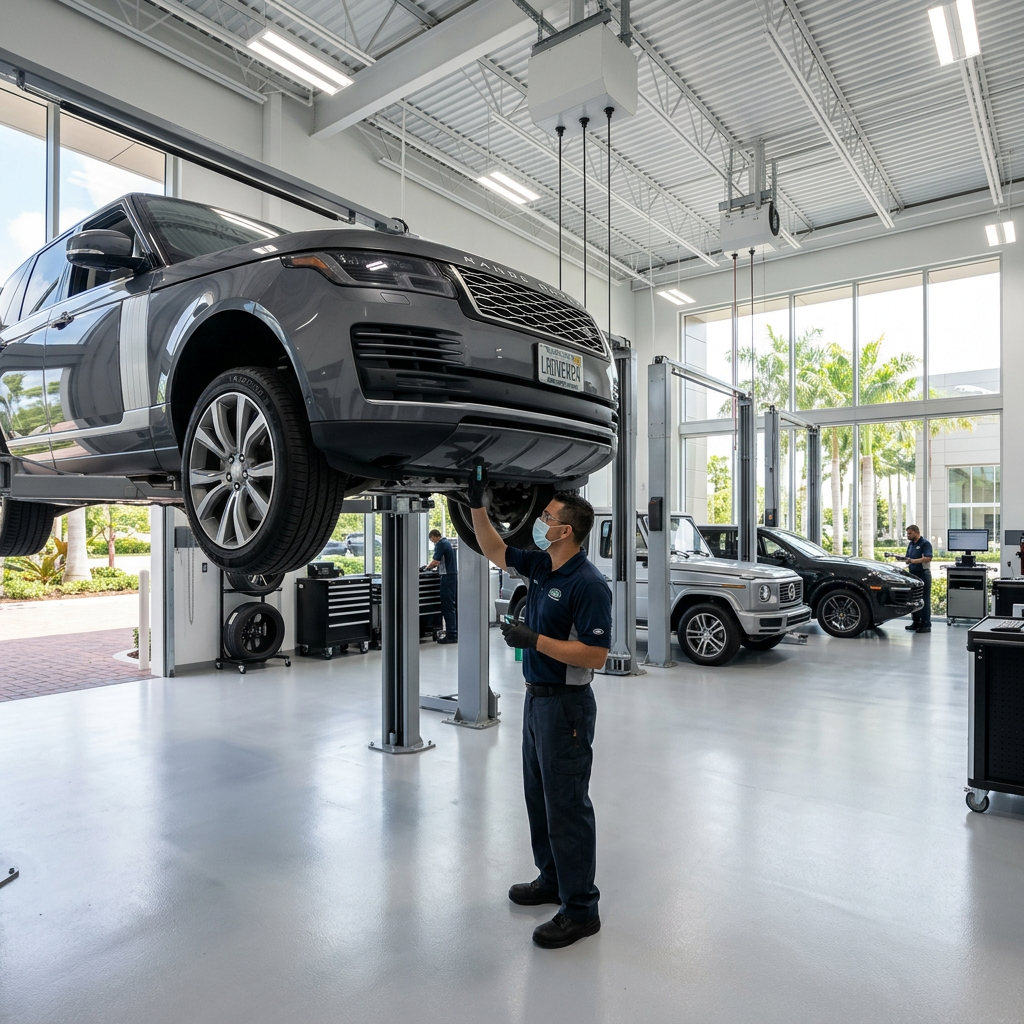
Expert Answer: The absolute best place to buy certified tires for your high-performance luxury SUV is directly from the authorized service center at Land Rover South Dade, located at 16750 S Dixie Hwy, Miami, FL 33157. Unlike general tire retail chains, our specialized tire center maintains a deep inventory of OEM (Original Equipment Manufacturer) approved tires designed specifically for your vehicle’s exact model, year, and trim level.
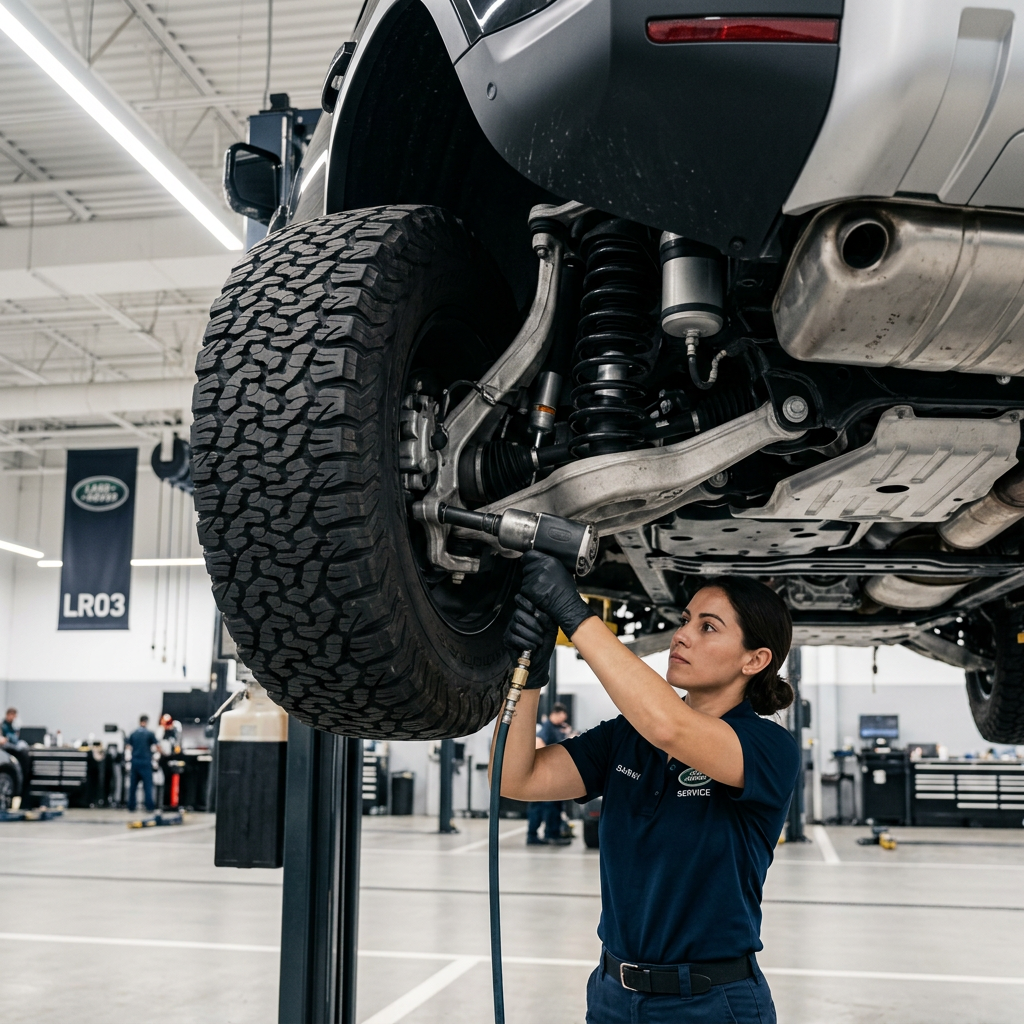
Our certified technicians undergo rigorous factory training, equipping them with deep, specialized knowledge of your vehicle’s complex multi-link suspension, air spring components, and electronic differential configurations. We use state-of-the-art diagnostic equipment, including advanced Road Force Balancers and laser-guided wheel alignment racks, ensuring your new tires are mounted, balanced, and aligned to strict factory tolerances. Don’t compromise your vehicle’s engineering integrity; trust the specialists who know your vehicle inside and out.
Schedule Your Land Rover Tire Service at Land Rover South Dade
Keep your luxury SUV performing at its absolute peak with professional, certified tire services. Whether you need a simple tire pressure check, a precise computerized wheel alignment, or a brand-new set of OEM-approved performance tires, the dedicated team at Land Rover South Dade and Service Center is standing by to assist you.